Sky deals for new customers
The best deals and offers are almost always available to new customers. Price discounts are common for customers signing up for bundles of TV, broadband and mobile.
-
 £90 Gift CardUltrafast Plus
- 500Mb average speed +
- Unlimited usage +
- PAYG calls
- £90 Gift Card
£33.00 per month(prices may change during contract)£90 Gift Card£5 one-off cost18 month contract -
£40 Gift CardSuperfast
- 61Mb average speed +
- Unlimited usage +
- PAYG calls
- £40 Gift Card
£27.00 per month(prices may change during contract)£40 Gift Card£5 one-off cost18 month contract -
£40 Gift CardSuperfast + Wifi Max
- 61Mb average speed +
- Unlimited usage +
- PAYG calls
- £40 Gift Card
£30.00 per month(prices may change during contract)£40 Gift Card£5 one-off cost18 month contract
Compare more deals
Best Sky TV only deals
Looking for the best Sky TV only deals? We've compiled the most popular deals on offer right now.
-
Stream + Entertainment + Netflix
- 150+ channels
£19.00 per month(prices may change during contract)£0 one-off cost18 month contract -
Stream + Entertainment + Netflix + Cinema
- 150+ channels
£31.00 per month(prices may change during contract)£0 one-off cost18 month contract -
Stream + Sports + Netflix
- 150+ channels
£43.00 per month(prices may change during contract)£0 one-off cost18 month contract
Compare all deals
Best Sky TV and broadband deals
Sky TV and Sky broadband go together like bread and butter. Save money by combining your TV and broadband services with Sky.
-
Stream + Entertainment + Sports + Netflix + Superfast
- 61Mb average speed +
- 150+ channels +
- PAYG calls
£58.00 per month(prices may change during contract)£0 one-off cost18 month contract -
Stream + Entertainment + Netflix + Gigafast
- 900Mb average speed +
- 100+ channels +
- PAYG calls
£54.00 per month(prices may change during contract)£0 one-off cost18 month contract -
Stream + Entertainment + Cinema + Netflix + Ultrafast
- 145Mb average speed +
- 150+ channels +
- PAYG calls
£48.00 per month(prices may change during contract)£0 one-off cost18 month contract
Compare all deals
Why choose Sky?
It’s fair to say Sky has the biggest and best TV offering of any UK provider, while its reputation for customer service is up there with the best.
- The UK’s best pay TV service
- Sky Q box
- Watch on the move with Sky Go
- UK’s least complained-about broadband provider
- Sky VIP loyalty scheme
The UK’s best pay TV service
Sky TV offers a very generous base TV package, with more than 300 channels, 500 Box Sets and a Netflix subscription as standard. With NOW TV Entertainment now available with BT TV, Sky is no longer the exclusive holder of the coveted Sky Atlantic.
Sky Q box
The standard Sky Q box offers 1TB of storage space – enough for 500 hours of TV – and allows you to record three channels simultaneously while watching a fourth.
Customers wanting to watch Sky on more than one TV in their home can choose to add on Multiscreen, which comes with one Sky Q Mini box and also the Sky Go Extra app. Additional Sky Q Mini boxes can be added for a further fee.
Watch on the move with Sky Go
The Sky Go app lets you watch your favourite shows live or on demand on a compatible tablet, laptop or mobile and it’s available free to all Sky TV customers. You can also use the app to set a recording on your Sky Q box so you never need to miss the TV you love.
Customers signing up for Multiscreen get upgraded to Sky Go Extra, which enables you to download or stream live TV on two devices at once and register up to four devices anywhere.
UK’s least complained-about broadband provider
Sky is consistently the provider responsible for the fewest complaints made to Ofcom of any broadband provider – in the three months up to March 2021 it attracted just two complaints per 100,000 customers, compared to an industry average of 6. Virgin Media scored the worst, with 17 complaints per 100,000 customers.
Sky is also the least complained-about provider of mobile services, with just one complaint per 100,000.
Sky VIP loyalty scheme
The Sky VIP loyalty scheme offers exclusive rewards for Sky customers. You get to choose a free movie as a welcome gift for joining, and then you move up through different membership tiers the longer you stay with Sky. Rewards such as free event tickets and experiences and early access to new tech become available as you move through the levels depending on how many years you stay with Sky, from entry-level Silver (0-3 years) through to the top-tier Diamond level (15+ years).
Can I get Sky in my area?
If you are thinking about joining Sky, you can easily find out whether it's available where you live and which packages are on offer. And if you can't get it for any reason, we can suggest some good alternatives.
To find out whether you can get Sky services, just put your postcode into our checker, and it will bring up a list of packages available at your address, including broadband options if you are considering a bundle.
Sky packages and bundles
Sky is what’s known as a “quad-play” provider, offering broadband, TV, home phone and mobile services. Sky no longer offers ‘named’ bundles that come with a set number of channels, specified broadband speed and call package. Instead, it offers a single TV package, simply known as Sky TV.
Sky TV
Sky TV comes on an 18-month contract and offers more than 300 channels as standard, along with over 500 Sky Box sets and Netflix subscription. In addition, customers have the option to add Sky Sports, Sky Cinema, kids channels, HD and UHD channels, Multiscreen, Disney+ and BT Sport, each for an additional monthly fee.
Sky Broadband
Sky offers four different broadband speeds, with availability varying according to where you live. Choose from Sky Broadband Essential Plus (Sky’s standard broadband) with an average download speed of 11Mbps, Sky Broadband Superfast, the entry-level fibre package with an average speed of 61Mbps, Sky Broadband Ultrafast, which offers 145Mbps or Sky Broadband Ultrafast Plus for a download speed of 500Mbps. Sky has a reputation for offering reliable broadband backed up by good customer service.
See also: Sky Q, Sky fibre broadband
Sky Mobile
Whether you want a new phone or just a SIM-only deal, Sky Mobile offers plenty of choice. All the latest Apple and Samsung handsets are available, along with cheaper options from OPPO, Nokia and Doro. Sky operates on the O2 network and all its SIM-only deals are 5G ready. Customers can benefit from innovative features like the Sky Piggybank, which lets you save up unused data to use whenever you like or share with a second SIM.
Sky Sports
A popular add-on to Sky TV, Sky Sports is made up of eleven channels, including dedicated Premier League, football, racing, cricket, F1 and golf channels. Pretty much any other sport you care to mention will be covered across the joint Sky Sports Action and Arena channel, from rugby to darts.
For more information, read our guide to Sky sports
Sky Cinema
This gives you access to the 12 Sky Cinema channels, as well as more than 1,000 movies available on demand, from sci-fi and horror to thrillers and family movies.
Downsides to choosing Sky
Broadband speeds can’t match Virgin Media – Sky provides broadband using the same Openreach network used by BT, TalkTalk, Plusnet etc, which is why the most widely available top speed offered by Sky is 61Mbps. This is more than enough for most households, but if you’re looking at pure speed it’s blown out of the water by Virgin, which promises speeds of 1130Mbps.
Sky does now offer faster speeds to customers who can access them, with Sky Ultrafast 145Mbps and Ultrafast Plus 500Mbps download speeds available. However, these speeds are still not as widely available as those offered by Virgin Media.
Watch out for extra costs – While you get more than 300 channels with Sky TV as standard, you will have to pay an extra monthly fee to enjoy features like Sky Multiscreen or even just to get a full complement of HD channels.
You will need a satellite dish for Sky TV – While Sky is shortly introducing its brand new Sky Glass concept which will not require a dish, for the time being you will still need to get one bolted onto the side of your house if you sign up to Sky TV. The only way to access Sky TV content without a dish is via NOW TV.
 Sky Stream £19 per month: Get Sky without a dish!
 Up to £60 cashback on Sky Broadband and Sky Full Fibre
 Sky Superfast broadband deal: Grab a £60 gift card
 Sky Glass offer: 3 months free TV and 6 months free Sky Sports
 Sky Broadband Black Friday deals April 2024
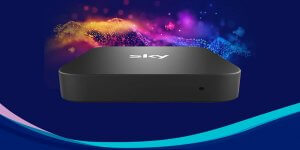 Get 9 months free Sky Broadband with Sky Stream
Frequently asked questions
Sky TV and Sky fibre come with 18-month contracts. Bear in mind that both Sky Sports and Sky Cinema come with their own 18-month contracts, so if you choose to bolt on one of these extras after you sign up, your contract with SKy will last even longer.
No. Although you do need a broadband connection to watch Sky Q, it does not have to be a Sky broadband service - you can choose another provider if you wish.
You can cancel within the 14-day cooling-off period without having to give a reason. You’ll also be able to get out of your contract without incurring additional charges if the service isn’t up to scratch and Sky has had every chance to sort it. Other than that, if you’re still within your minimum term contract, you will be charged an early termination fee to leave.
Yes. It’s not cheap but if you want to watch the Champions League on your Sky Q box you can add the BT Sport channels for an additional monthly fee. Happily, BT Sport is on a rolling 31-day contract, so you can cancel at any time.
Yes. A Netflix Basic subscription is included as standard with Sky TV Ultimate. This allows you to watch the service on one TV and only in standard definition. You can choose to upgrade the subscription – at extra cost – if you wish.
Yes. Disney+ is available as an add-on as part of your Sky TV subscription on a 31-day rolling contract.